Key Takeaways
A practical comparison of residential, datacenter, ISP, and mobile proxies for web scraping teams choosing a production proxy setup.
The search query behind this article is best proxies for web scraping, but the real buying question is more practical: Which proxy type should I use for a web scraping project that has to survive production traffic?
This guide is written for scraping teams comparing proxy types before building or replacing a production collection workflow. It is not a generic proxy glossary. It is a decision guide for teams that need a working residential proxy setup, a realistic budget, and a clear next page to evaluate BytesFlows.
If you already know the proxy workflow you need, start with Web scraping proxies. If you are still comparing options, keep reading and use the decision table below as a shortcut.
The Short Answer
A practical comparison of residential, datacenter, ISP, and mobile proxies for web scraping teams choosing a production proxy setup.
In production, the best answer is rarely "buy the biggest proxy pool." The better answer is to match proxy type, session behavior, protocol support, traffic budget, and target difficulty to one business workflow. BytesFlows is focused on residential proxy workflows, so every recommendation in this article points back to stable commercial pages rather than dashboard-only routes or temporary blog URLs.
Decision Table
Situation | Recommended path | Why it matters | What to watch |
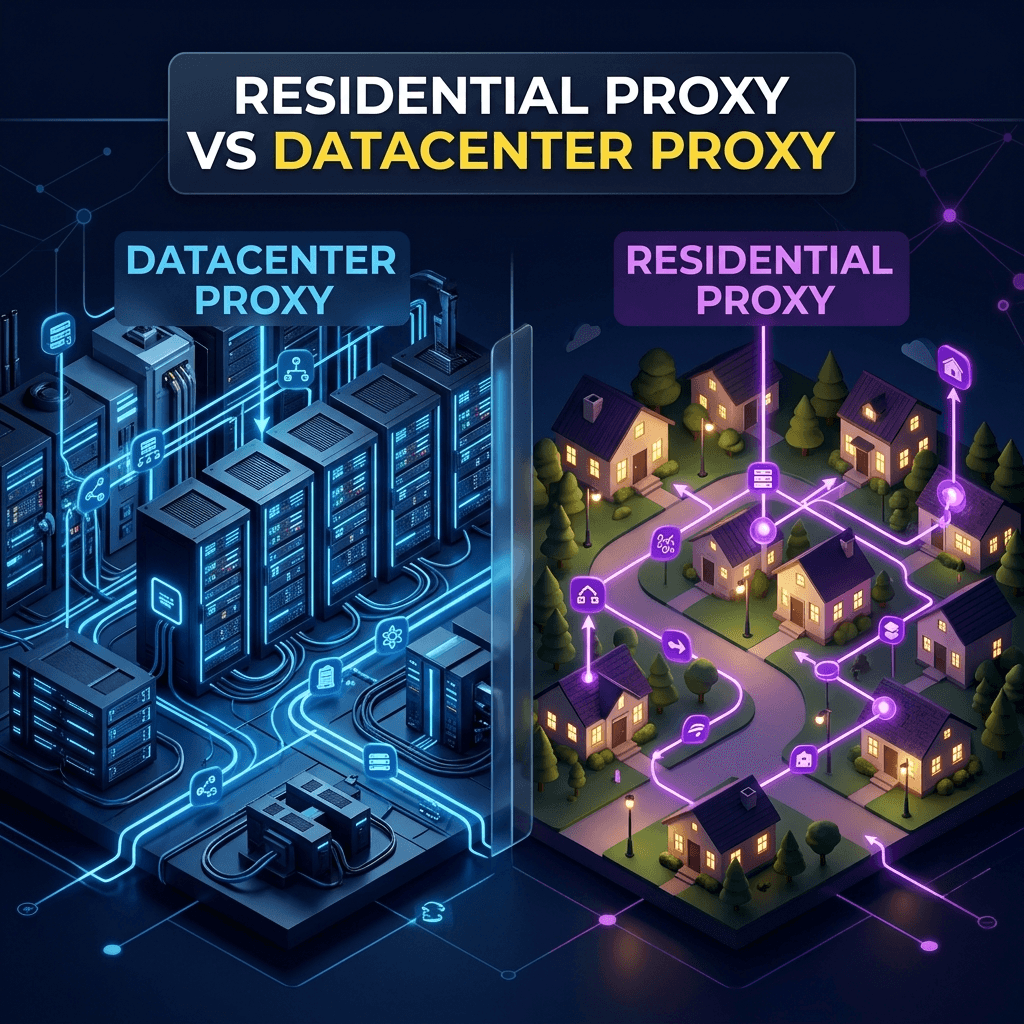
Residential | Most production scraping | Real user routing, geo accuracy, lower block pressure. | Higher cost than datacenter. |
Datacenter | Simple targets and internal QA | Fast and cheap. | Easier to identify and block. |
ISP/static residential | Stable identity workflows | Trust plus continuity. | Less flexible for broad rotation. |
Mobile | Mobile-only surfaces | Carrier-grade signals. | Usually more expensive and not always necessary. |
What Teams Usually Get Wrong
The best proxy for web scraping is the proxy type that fits the target, not the one with the biggest pool claim. A public directory, a JavaScript storefront, and a search result page all create different access patterns. Start from target behavior before choosing infrastructure.
Residential proxies are usually the safest default for production scraping because they combine real-user routing with geographic coverage and rotation control. They are especially useful when datacenter traffic returns blocks, misleading localized content, or inconsistent results.
Datacenter proxies still have a place. If a target is simple, tolerant, or controlled by your team, datacenter routes can be cost-effective. The mistake is assuming datacenter success on a small test will hold when cadence, markets, and concurrency increase.
ISP-backed routes sit between rotating residential and datacenter. They are useful when a workflow needs a steadier identity but still benefits from ISP trust signals. They are not a replacement for broad rotating discovery across many pages and markets.
Mobile proxies should be reserved for genuinely mobile-specific tasks. They can be valuable for app-like surfaces and mobile-only experiences, but they are not automatically better for normal web scraping. Cost and availability should be justified by the target.
A Practical Rollout Checklist
- Run a small target sample through each proxy type you are considering.
- Measure successful outputs, not just HTTP 200 responses.
- Check whether target content changes by geography, device, or session state.
- Choose rotating residential for broad public scraping unless tests prove a cheaper route is stable.
- Document the fallback strategy for retries, screenshots, and target changes.
Do not skip the sample stage. A small validation run gives you target-specific evidence: response quality, retry pressure, session requirements, page weight, and whether the result is useful for the business team. That evidence is more valuable than a generic provider claim.
Internal Links for the Next Step
These links are intentionally commercial. A reader who reaches this point is no longer asking what a proxy is; they are deciding which workflow, plan, product page, or validation tool should come next.
Traffic and Quality Model
Use this simple model before buying a larger plan:
~~~text
Estimated traffic = average page weight x target count x market count x refresh cadence x retry multiplier
~~~
That formula is not perfect, but it forces the team to name the real cost drivers. Target count is only one part of the forecast. Market count matters when the same query, SKU, or page must be collected from several countries or cities. Refresh cadence matters when the job runs hourly, daily, or weekly. Retry multiplier matters because a weak route, broken parser, or target-side challenge can silently double the traffic needed for the same number of useful outputs.
For a first estimate, use three bands. A lightweight HTTP collection job can often be estimated by page size and retry rate. A JavaScript-heavy browser job should be estimated per completed workflow because one output can load many resources. A screenshot or evidence workflow should be estimated separately because visual capture usually costs more than a structured HTML pull.
The quality model should be just as explicit. Count a result as successful only when it is usable by the business workflow. For SEO, that means the rank, market, device assumption, and timestamp are all clear. For e-commerce, that means price, stock, currency, and product identity are parsed correctly. For browser automation, that means the whole stateful task completed, not merely that the first page loaded.
Failure Modes to Watch
Most teams see the same failure categories:
- Wrong location: the request succeeds, but the content belongs to the wrong market.
- Soft block: the response is technically successful, but the page is a challenge, consent wall, empty listing, or degraded view.
- Parser drift: the proxy route works, but the target layout changed.
- Session mismatch: a workflow needs continuity, but the crawler rotates too aggressively.
- Protocol mismatch: the route works in one tool but fails in another because HTTP, SOCKS5, DNS, or authentication handling differs.
Log these separately. A single "failed" bucket hides the decision you need to make next. Wrong location suggests route targeting work. Soft blocks suggest pacing, session, or target diagnosis. Parser drift is an application issue. Session mismatch points to rotating versus sticky policy. Protocol mismatch points to setup and tool compatibility.
When BytesFlows Is the Right Next Step
BytesFlows is a practical fit when the team has moved beyond curiosity and needs repeatable residential routing for a real workflow. The signal is not "we need proxies." The signal is that public web data quality, localized visibility, recurring monitoring, browser continuity, or target reliability now affects a business process.
Use a free or small validation run when the target is unknown. Use a focused solution page when the workflow is known. Use pricing when the team can estimate traffic. Use comparison pages when the team is choosing between proxy types or providers. This is the conversion path the article should support, and it is why every article in this batch links to stable commercial pages instead of relying only on the blog index.
Implementation Notes
Keep the implementation simple at first. Use one target group, one market group, and one proxy policy. Add complexity only when the result proves useful. For scraping and monitoring workflows, log route assumptions alongside output data so future debugging does not rely on memory. For browser automation workflows, record session duration, protocol, and whether the same task succeeds without loading unnecessary assets.
When a target returns unexpected content, diagnose the cause before increasing volume. Check the exit location, protocol, target response, rendered page, and parser output separately. A failed job can be caused by network routing, session policy, target layout changes, bot friction, localization, or code. Treat those as separate failure categories.
Recommended BytesFlows Path
Use the web scraping solution page for the workflow, then choose a product guide for rotating, sticky, SOCKS5, or ISP-backed routing.
The most efficient path is:
- Use this article to decide the workflow.
- Open the linked product, solution, comparison, or tool page.
- Validate with a small amount of traffic or a free tool.
- Move only proven workflows into recurring production runs.
FAQ
Should I start with the cheapest proxy option?
Start with the cheapest option only if it produces the output you need. For production scraping, SEO monitoring, and browser workflows, the cheaper route can become more expensive when retries, blocks, wrong locations, or failed sessions are included.
Should this be handled by a blog article or a product page?
Use the blog article for research and decision support. Use the linked BytesFlows product, solution, comparison, or pricing page when you are ready to choose a setup.
How should I measure success?
Measure successful business outputs: usable pages, clean SERP records, completed browser flows, verified screenshots, accurate prices, or market-ready datasets. Do not rely only on HTTP status codes.
Where should I go next?
Open Web scraping proxies and compare it with the related links above. If the workflow is still uncertain, begin with Proxy Guides or Proxy Test Tool.
Featured Launch

BytesFlows
Residential proxies with free 1GB & daily rewards
Recommended Solution
Web Scraping Proxies
Collect public web data with rotating residential proxies, geo targeting, and crawler-friendly routing.
RELIABLE ACCESS
Residential proxies for teams that need steady results.
Collect public web data with stable sessions, wide geo coverage, and a fast path to launch.
Start Free Trial
Used by teams collecting data worldwide